
MENU



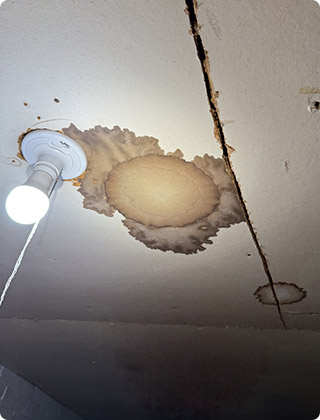
Learn why attic mold happens, what the warning signs can look like, and when inspection or testing may help you move from uncertainty to a clear next step at home.
Attic mold is one of those problems that can seem to come out of nowhere. You go up to grab holiday decorations, and suddenly, the roof sheathing has dark spotting. Or you notice a musty smell that seems stronger near the attic hatch. Or you find damp, clumped insulation and start wondering what has been happening above your ceiling while life carried on downstairs.
In this guide, we focus on building conditions and practical next steps. Public health guidance consistently emphasizes controlling moisture and dampness as the core strategy, rather than trying to "read" a surface color as proof of what is happening. If you need to know what you are dealing with, the reliable path is documentation plus moisture investigation, and when appropriate, sampling analyzed by a qualified lab.
Attic mold is a general term for visible microbial growth or staining that develops on attic surfaces (roof sheathing, rafters, trusses), insulation, stored items, or other materials when moisture conditions stay elevated long enough.
What it is not: a surface condition that can be reliably identified by appearance alone. Many people search for identifying mold types and expect a photo comparison chart to solve it. The reality is that appearance varies widely, and a single surface can host more than one type. Color alone does not confirm what it is. If identification matters for a project decision, that is where sampling and lab analysis comes in.
Most homeowners assume attic mold is always a roof leak. Sometimes it is. But in many cases, attic mold shows up because of airflow, temperature, and moisture patterns that repeat quietly over months - especially in climates with humid summers, cold winters, or big swings between the two. The attic often reveals how pressure, temperature, and moisture are interacting inside the home. If warm, moisture-laden air gets into that space and hits cold surfaces, condensation can form. Condensation plus organic material can create conditions that support growth.
Attic mold often looks simple on the surface, but the real question is what the moisture is doing and where it is coming from. That is why an attic mold inspection focuses on documenting visible conditions, checking for moisture indicators, and identifying likely drivers like ventilation imbalance or roof leaks. If you are wondering how to test for mold in attic spaces, the most reliable approach is a combination of visual assessment and targeted sampling when conditions suggest it may add useful clarity.
If you only read one section, make sure it is this one. These patterns are common in real homes, and they help you move from uncertainty to a plan.
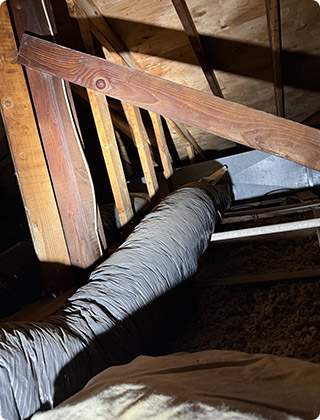
When you see signs of mold in attic areas, your next question should not be "what cleaner should I use?" It should be "what keeps feeding moisture into this space?" Here are the most common repeat offenders.
Homeowners often search for black or white mold in the attic and assume the color is the diagnosis. Color can be a useful clue, but it is not a reliable conclusion on its own.
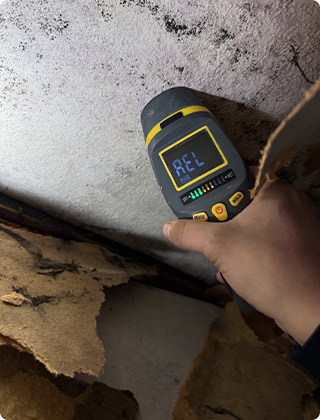
Attic mold testing is not just looking for dark spots and making a quick assumption. A good inspection and testing are a structured process: document what is visible, map moisture risk, and connect patterns to likely drivers.
Depending on access and conditions, an inspection may include:
Important boundary: a mold inspection documents what is observed at the time of the visit and helps you understand the next steps. It does not diagnose health conditions. It also does not guarantee that everything hidden inside assemblies can be confirmed without invasive access.
If you discover mold in your attic, it needs to be treated, and the question homeowners face is whether to clean it, test it, or call a professional. Small, isolated surface issues may seem minor, but the right action depends on how extensive it is, the moisture source, and whether the area can be safely and clearly. But there is a point where DIY becomes less reliable and more likely to miss the underlying problem.
EPA guidance commonly referenced by homeowners uses a size-based rule of thumb: if the moldy area is less than about 10 square feet, it may be manageable for some people, while larger areas often justify professional help and better planning.
If you are beyond the "small isolated spot" stage, the smartest move is usually a documented attic mold inspection that focuses on why it happened and what fixes are needed.
If you have attic staining, musty odors, or mold in attic insulation and you want to understand what it likely means, O2 Mold Testing can help you document conditions and provide clear findings through a scope-appropriate attic mold inspection. Call 888-202-1680 or fill out the contact form.
Not reliably. Many different types can look similar, and the same type can look different depending on moisture and surface material. Visual assessment is useful for documenting patterns, but lab analysis is the reliable method when identification matters.
Common signs of mold in attic areas include dark spotting on roof sheathing, musty odors near the attic hatch, damp or compressed insulation, staining trails near roof penetrations, and visible growth on framing.
No. Roof leaks can cause attic mold, but condensation from ventilation and air leakage issues is also a common driver - especially in winter.
Attic mold inspection cost factors usually depend on the size and accessibility of the attic, how many areas need to be checked, whether insulation or stored items limit visibility, and whether testing is included. The scope can also change based on the type of concerns present, such as suspected leaks, ventilation issues, or widespread staining.
If you see any mold, this indicates prolonged dampness in a localized zone. The priority is identifying why that area stays damp, not naming the mold by appearance.
Start by documenting what you see and looking for moisture drivers such as bathroom fan venting, air leaks, ventilation imbalance, or roof penetration leaks. Color alone does not confirm a specific mold type, so focus on conditions and next steps.
Testing is most useful when paired with an inspection that documents visible conditions and moisture patterns. Surface sampling can help confirm suspect material on a surface. Air sampling may help compare conditions when designed correctly. Lab results are best interpreted alongside the building context.
It depends on the type of insulation, how much is affected, and whether moisture is active. In many cases, insulation that is damp or visibly affected may need to be removed and replaced as part of a findings-based plan determined by the appropriate project scope.
Warm, moisture-laden air from the living space can leak into the attic and condense on cold roof sheathing. Poor ventilation, blocked soffits, and air leaks make this more likely.
If you need clear, written findings and sampling results for a project decision, O2 Mold Testing can help with targeted sampling and documentation as part of an attic mold inspection. Call 888-202-1680 to discuss what you are seeing and what information would actually be useful.
Educational note: This article focuses on building conditions and practical next steps. It does not diagnose health conditions, and symptoms alone cannot confirm mold exposure.