Surface Sampling for Mold
When there is visible discoloration, residue, or suspected growth on a surface, surface sampling can help document what is present on the sampled material. This type of mold testing is often used when a stain needs a closer look, when written lab documentation is needed, or when visual findings need sample-based support.
When sampling is appropriate, the sample type and number of samples collected will depend on site conditions, the size and accessibility of the area, and the purpose of the testing. In some cases, a visual mold inspection may be enough to guide the next step.
Contact us to discuss your situation and testing goals so we can determine the appropriate mold testing approach.
What Surface Sampling Is
Surface sampling involves collecting a sample directly from a material or area where visible growth or residue is present or suspected. The purpose is to identify what is on the sampled surface through third-party laboratory analysis.
This can be useful when a property owner, buyer, manager, or other stakeholder needs more than a visual opinion alone. Depending on the surface and the condition of the material, sampling may help determine whether the collected material contains mold structures, spores, or other particulate matter consistent with fungal growth.
When Surface Sampling May Be Useful
Surface sampling may be considered when there is a specific visible area that needs closer evaluation or documentation. Common situations include:
- Suspicious staining or spotting on drywall, wood, trim, or other accessible materials
- Follow-up after a leak, moisture event, or recurring staining concern
- Property sale, purchase, or maintenance documentation
- Questions about visible residue on contents, furnishings, or HVAC components
- Situations where air sampling may also be considered for broader context
In some cases, visible growth is already apparent and the main value of testing is documentation rather than discovery.
How Surface Sampling Works
At O2 Mold Testing, the surface sampling process usually starts with a visual review of the area in question. From there, the collection method is selected based on the surface type, the condition of the material, and the reason the sample is being collected.
A typical process may include:
- Reviewing the suspected area and surrounding conditions
- Choosing an appropriate collection method for that surface
- Collecting one or more samples from selected locations
- Sending samples to an independent third-party laboratory for analysis
- Issuing a written report with the lab findings and related observations
Laboratory results are typically available within about 5 business days, depending on the third-party laboratory and service level.
Common Surface Sample Types
Several surface sampling methods may be used depending on the material and the condition of the area being tested.
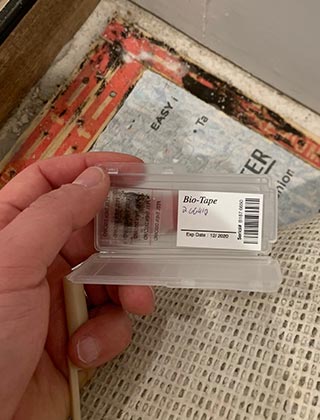
- Tape-lift samples are commonly used on smooth or lightly textured surfaces where visible residue or growth can be collected directly.
- Swab samples may be used on irregular, dusty, or less uniform surfaces where a direct tape collection is less practical.
- Wipe-style collection may be considered in some situations where broader surface residue needs to be gathered from a defined area.
- Bulk sampling may also be referenced in limited situations, depending on the testing objective and the material involved, but sampling strategy varies by condition and is not standardized across every job.
Call us at 888-202-1680 and describe the visible area, surface type, and documentation needs so the sampling approach can be matched to the situation.
Cost of Surface Sampling
Surface sampling is included in both our Standard and Advanced packages, depending on the testing needs and the overall scope of the project.
If more sampling is needed beyond what is included in the selected package, additional surface samples can be added as extra samples. The final sample count depends on the size of the property, the number of areas of concern, access, and the purpose of the testing.
For package details and pricing, please visit our Mold Testing Pricing page.
What Results Can and Cannot Tell You
Surface sampling can help identify what was collected from a specific sampled area and provide written laboratory documentation of those findings. That can be useful when the question is tied to one visible location or when records are needed for property-related decision-making.
At the same time, surface results have limits. A surface sample does not, by itself, define overall indoor air conditions throughout a property. It also does not serve as a medical, legal, or safety conclusion. This general limitation is consistent with guidance from agencies such as the EPA and CDC, which note that mold evaluation should be interpreted in context rather than treated as a stand-alone health determination.
Findings should be read in the context of the sampled location, the visible conditions, and the broader testing goal.
What Happens After Results Come Back
The next step depends on why the sample was collected in the first place. In some cases, the result mainly serves as documentation for a visible area. In others, the findings may support broader follow-up, such as additional inspection, more sampling, or decisions about cleaning or removal based on the condition of the material and the area involved.
Lab findings are most useful when considered together with the visible conditions, the location of the sample, and the reason testing was requested.
Surface Sampling vs. Air Sampling
Surface sampling and air sampling answer different questions:
- Surface sampling is usually best when there is a specific visible area or residue that needs to be evaluated directly. It helps document what is present on that sampled material.
- Air sampling is often considered when the concern is not limited to one visible area and the goal is to compare airborne particulate conditions between areas or between indoor and outdoor reference samples.
In some cases, one method may be enough. In others, both may be considered when the testing objective calls for a broader context.
What to Have Ready Before Calling
To help determine the most appropriate sampling approach, it helps to have a few basic details ready:
- Where the concern is located
- What type of surface or material is affected
- Whether the area is accessible for sampling
- Whether there has been a leak, moisture issue, or recurring condition
- Whether the main goal is clarification, documentation, or broader testing
Schedule Mold Surface Sampling
If you need clear documentation and professional mold testing services, O2 Mold Testing can help. Use our contact form or call 888-202-1680 to discuss your situation, determine if surface sampling is suitable for your property, and get a scope-based service estimate tailored to your needs.
Surface sampling provides environmental data, so you can make informed decisions - without assumptions and without overpromising outcomes.
Frequently Asked Questions
Is surface sampling the same as air sampling?
No. Surface sampling looks at material collected from a specific surface, while air sampling is used when the concern involves airborne conditions rather than one visible area.
Can surface sampling tell me whether a stain is mold?
It can help identify what is present on the sampled material. The result applies to the area that was sampled and should be interpreted in the context of the visible condition and the testing goal.
How long do surface sampling results take?
Laboratory results are typically provided within 5 business days, based on third-party laboratory timelines. Timing can vary depending on the laboratory and the scope of the project.
How many surface samples are usually needed?
The number of samples depends on the size of the concern, the number of materials involved, access, and the purpose of the testing. Some situations may call for a limited sample count, while others may require a broader scope for documentation.
Is surface sampling always necessary when mold is visible?
No. Surface sampling is not always required. In some cases, visible growth is already apparent, and the main reason to test is documentation rather than determining whether further evaluation is needed.
How much does surface sampling cost?
Cost depends on the scope of testing, the number and type of samples, access conditions, and whether other testing is being performed at the same time.