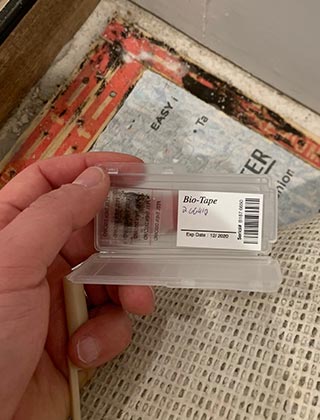
Professional Visual Mold Inspection
Focused on Observable Conditions, Moisture Indicators, and Clear Documentation
When something feels off in a home, it usually starts small - a dark line on the ceiling, peeling paint near a baseboard, a closet that smells damp, or a room that never seems to dry out after a leak. A visual mold inspection helps turn that uncertainty into documented, measurable information.
At O2 Mold Testing, our inspectors evaluate accessible areas for visible mold-like conditions, water intrusion indicators, and moisture patterns using non-invasive tools when appropriate. You receive clear documentation of what was observed at the time of the visit, along with a practical explanation of whether additional mold testing, such as air sampling or surface sampling, may be useful for your goal. We do not perform remediation, and we do not diagnose health concerns - we provide objective inspection and reporting to support the next steps.
What a Visual Mold Inspection Is (and Is Not)
A visual mold inspection involves a systematic walkthrough of accessible areas to look for visible staining, discoloration, water damage, and signs of moisture patterns. It may also include basic moisture measurements to identify areas where conditions could support mold growth.
It is important to understand the boundaries of this service:
- A visual inspection does not confirm the type or concentration of mold.
- A visual inspection does not diagnose health conditions or exposure.
- A visual inspection does not include mold removal, cleanup, or treatment.
- A visual inspection may be conducted along with sampling, depending on the scope.
For general public guidance on mold and moisture, we reference trusted sources such as the U.S. Environmental Protection Agency (EPA) and CDC/NIOSH, which emphasize moisture control and practical, evidence-based steps for managing damp indoor environments.
The goal is clarity around visible conditions, not conclusions beyond what can be observed.
What to Expect During a Visual Mold Inspection
While every property is different, most visual mold inspections follow a similar structure. The purpose is to document observable conditions and gather environmental information, not to diagnose problems or prescribe solutions.
- Step 1: Initial walkthrough: We review the areas of concern and any visible conditions or moisture issues you have noticed.
- Step 2: Visual assessment: Accessible areas are inspected for staining, water damage, and mold-supporting conditions.
- Step 3: Moisture evaluation: Non-invasive tools may be used to identify elevated moisture levels where appropriate.
- Step 4: Discussion of next steps: Based on observations, we explain whether additional testing, such as air sampling and surface sampling, or moisture detection, may be considered.
Schedule a visual inspection today and get the clarity you need! Call 888-202-1680.
When a Visual Mold Inspection May Be Useful
Visual mold inspections are commonly requested when property owners need help interpreting observable conditions or documenting concerns in a clear, objective way.
These situations may include:
- Visible staining or discoloration on walls, ceilings, or building materials
- Musty or persistent odors without a clear, identifiable source
- Recent or past water intrusion, leaks, or flooding
- Condensation issues around windows, HVAC components, or bathrooms
- Pre-purchase or pre-lease due diligence where documented observations are needed
In many cases, a visual inspection provides sufficient clarification of visible conditions and moisture patterns. In other situations, it supports documentation for records, planning, or communication with third parties, and helps determine whether air sampling or surface sampling may be useful based on observed conditions.
For home buyers, a visual mold inspection is a critical step. Check out our post on Should You Get Mold Inspection When Buying a House to learn more about why it's important during a property purchase.
What Our Inspectors Look For
During a visual mold inspection, our inspectors focus on observable and measurable conditions, including:
- Areas of visible mold-like growth or staining
- Water damage, bubbling paint, or warped materials
- Signs of chronic moisture such as condensation patterns
- Plumbing leaks, roof leaks, or drainage concerns where visible
- Ventilation and airflow limitations in moisture-prone spaces
Is your property showing signs of water damage or mold-like growth? Call us at 888-202-1680 for a professional visual mold inspection.
Tools Used During a Visual Mold Inspection
While the inspection is primarily visual, we may use non-invasive tools to support observations:
- Moisture meters to identify elevated moisture levels in materials
- Thermal imaging cameras to highlight temperature differences that may suggest moisture intrusion
- Hygrometers to measure ambient humidity levels
These tools do not confirm mold presence on their own. They help identify conditions that may warrant further evaluation.
What You Receive After the Inspection
After a visual mold inspection, clients will be informed of the findings:
- Areas inspected and conditions observed
- Moisture detection results, if taken
- Photographic documentation when applicable
- Explanation of whether additional testing may be considered
If testing is performed, laboratory results are provided separately.
Visual Inspection vs Mold Testing
A common question is whether a visual inspection is enough or if mold testing is needed.
- Visual Mold Inspection: Documents visible conditions, identifies moisture problems, and helps decide if further testing is needed.
- Mold Testing: Involves collecting air or surface samples and sending them to a lab for analysis. Testing is optional and done only when needed.
Inspection and testing serve different purposes and are often used together, but one does not replace the other. For a better understanding of mold detection costs, check out Our Mold Testing Pricing.
Limitations to Be Aware of
A visual inspection method will not provide information about inaccessible areas. A visual mold inspection reflects conditions observed at the time of the visit.
Changes in humidity, water events, or building use after the inspection may alter conditions. Results should be viewed as a snapshot, not a guarantee.
Why Choose O2 Mold Testing
- Independent scope: We provide inspection and testing services only, which helps maintain separation from remediation.
- Clear documentation: We document observed conditions and moisture indicators and explain whether additional testing may be useful based on your goal.
- Third-party lab analysis: When sampling is performed, samples are submitted to independent laboratories for analysis.
- Guidance-informed process: Our documentation and sampling approach is purpose-based and aligned with widely used industry guidance and public recommendations on moisture and mold.
- Post-remediation verification testing (when requested): If independent remediation has been completed, we can perform verification testing and reporting to document conditions at the time of the visit. Results are provided as environmental data, not certifications or guarantees.
This approach helps reduce conflicts of interest and keeps findings focused on observed conditions.
Frequently Asked Questions
Does a visual mold inspection confirm mold?
No. A visual inspection documents visible conditions and moisture patterns. Laboratory testing is required to confirm the type of material present.
Do all inspections require mold testing?
No. Testing is optional and based on observed conditions, goals of the inspection, and client needs.
How long does a visual mold inspection take?
Inspection may take one to two hours, depending on factors including property size and sample collection.
Can a visual inspection tell me if my home is safe?
No. Visual inspections provide environmental observations and data, not safety determinations or health conclusions.
Schedule a Visual Mold Inspection
If you are noticing visible staining, moisture concerns, or want a professional assessment before deciding on testing, a visual mold inspection may be an appropriate starting point.
Call 888-202-1680 or contact O2 Mold Testing online to schedule an inspection or discuss which mold testing services may fit your situation.
Clear observations. Defined scope. Independent testing. We provide environmental information to support informed decisions.