
MENU



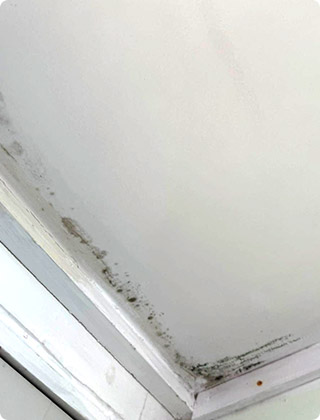
Two months ago, a Miami homeowner called because their son's cough kept getting worse, but only at home. No stains on the walls, no leaks they knew about, nothing that looked alarming. But inside the drywall between the bathroom and his bedroom, we found damp insulation and active mold growth running nearly six feet.
That's how hidden wall mold works. It does its worst damage long before anything appears on the surface. By the time you see stains or smell something musty, the problem may have been active for weeks or even months.
This guide shows you the 5 signs your walls might be hiding mold, how to evaluate the risk, and when it's time to stop guessing and schedule professional testing.
Hidden mold inside walls is a serious problem because it sometimes causes chronic health issues, actively damages your home's structure, and leads to exponentially higher repair and remediation costs.
Mold inside walls grows in dark, humid spaces where moisture stays trapped. Once it starts, it can spread through insulation, framing, and drywall, sometimes reaching ceilings or floors before anyone notices.
The first thing most homeowners notice is a change in how the wall looks. Spots, streaks, shadows, or faint smudges often indicate activity underneath.
Low concern: It's a one-time small spot from a spill or furniture mark.
High concern if:
Mold testing recommended when: Recurring stains appear plus a musty odor OR there is a history of moisture in that area.
A musty smell is one of the strongest clues that mold is growing inside a closed space. Odors often appear before anything becomes visible. If the smell is strongest near a particular wall, closet, or corner, the mold may already be active inside the structure.
Low concern: The smell disappears after deep cleaning and drying.
High concern if:
Testing recommended when: There's a persistent musty smell with no visible cause - mold gases travel through tiny gaps inside walls long before stains show up.
If the panel feels spongy or uneven, there is a high chance that mold has already colonized the inside. Cracking, separation at seams, or stains that appear along nail or screw lines can also point to moisture problems hiding behind the surface.
Low concern: Minor cosmetic peeling unrelated to water.
High concern if:
Normal wear and tear don't create soft drywall - moisture does.
Testing recommended when: Soft spots or bubbling appear near plumbing lines, bathrooms, or exterior walls.
Every leak carries a risk. Mold only needs 24 to 48 hours of moisture to start forming. Roof leaks, pipe bursts, flooding, and condensation inside exterior walls all create the perfect conditions for mold.
High concern situations:
Mini case (real scenario): We inspected two homes with the same bathroom leak.
The leak was nearly identical; the difference was how quickly they tested.
Testing recommended when: Any water event occurred, and the wall was never professionally checked afterward.
If mold is growing inside your walls, there's a possibility that you could be exposed to it, as mold particles can become airborne. For some people, that means mild irritation. For others, it means headaches, coughing, congestion, and allergies that only show up at home. Children, older adults, and people with asthma may experience the effects more quickly, as they are often more sensitive to environmental irritants like mold.
Because it's sealed away, hidden mold is easy to overlook, even when it's affecting your health.
Common reactions to mold exposure:
If symptoms improve after leaving home, it's possible that mold inside the walls is releasing particles into the air, although other factors could also be contributing.
Testing recommended when: Multiple household members feel better away from the house OR symptoms appear only in specific rooms.
Don't wait for hidden mold to compromise your health or home. Contact O2 Mold Testing today at 888-202-1680 for a professional inspection.
Homeowners can try simple checks, but accurate testing requires more than looking at the surface. Professional mold testing specialists use tools that detect what the eye cannot see.
When we test walls for mold, we're solving three critical questions:
To answer these, we use:
The result isn't a confusing lab sheet. It's a simple answer: no problem / watch this area / fix this now.
With expert interpretation of the results, you get a clear picture of the problem instead of guessing based on appearance alone.
Noticing black mold on the wall can be concerning, but its color alone doesn't indicate the level of danger. Any mold on the wall should be taken seriously. The key step is to determine whether the growth is just on the surface or if it is spreading inside the wall.
What matters is depth:
If stains keep returning, the wall feels soft, or the odor is strong, do not clean it blindly. Testing tells you whether it's confined or spreading.
DIY removal is not recommended for hidden mold, as opening a contaminated wall without proper containment can spread spores throughout the home.
When mold is suspected inside wall cavities, professional testing and controlled removal are essential to ensure the problem is fully resolved and does not return.
Visible mold removal from walls must follow a controlled, step-by-step process to avoid spreading spores into the air. Safe removal is only possible when the moisture source has already been identified and corrected.
Seal off the affected space using plastic sheeting and tape to prevent airborne spores from traveling to other rooms. Floors, doorways, and vents should be isolated before any work begins.
Turn off electricity to circuits running through the wall and shut off water lines if plumbing is present. This reduces safety risks once the wall is opened.
Mark the visible mold and surrounding sections, then locate wall studs to determine how far the contamination may have spread inside the cavity.
Carefully cut and remove soft or moldy drywall. All contaminated materials should be immediately sealed in contractor-grade bags to prevent spore release.
Insulation inside the wall often holds moisture and mold. Any affected insulation must be removed, bagged, and discarded until only clean, dry material remains.
Once drywall and insulation are removed, inspect studs, sill plates, and framing. Mold frequently remains on hard surfaces and must be addressed before the wall is closed.
The area must be fully dried using controlled airflow. No moisture should remain before moving forward, as damp conditions allow mold to return.
All remaining mold residue and debris should be removed using a HEPA-filtered vacuum, followed by application of an appropriate biocide to disinfect surfaces.
After drying, apply a fungicidal encapsulant to seal treated surfaces and prevent future growth.
Only after the area is verified clean and dry should new insulation and drywall be installed, finished, and painted.
Testing is the right next step when:
Testing gives you clarity: where mold is, how severe it is, and what needs to happen next.
Learn more about our mold testing cost packages and call us at 888-202-1680 if you have any questions.
Small steps taken early prevent the expensive problems no one sees until it's too late.
Signs include recurring visible stains, persistent musty odors, and damaged drywall like bubbling paint or soft spots.
Mold often produces a damp, earthy, or musty odor.
No. Painting over stains does not eliminate the underlying problem. Mold can continue to grow behind the paint and through the drywall.
No. The color of mold does not determine its toxicity level. While some dark molds are associated with health concerns, various types can appear in black.
Mold typically begins to form within 24 to 48 hours after a moisture event occurs.
Ask yourself:
If you answered yes to two or more, testing isn't overreacting - it's the safest way to find out whether this is a small fix or a growing problem.
Schedule a mold inspection with O2 Mold Testing and find out what's really happening behind your walls. Call us at 888-202-1680.