Published: 07/2025
(
Updated: 10/2026)
by Luther Litchfield
Are DIY Mold Test Kits Reliable?
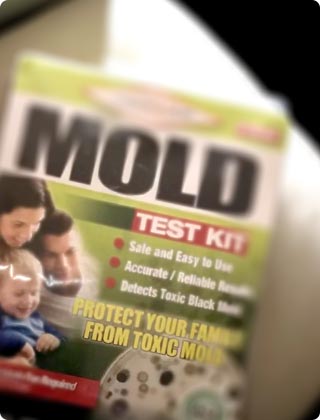
DIY mold test kits can be useful, but reliability depends on what you expect the result to tell you. A kit may show what was collected from one plate, swab, or air sample. It does not automatically explain what is happening throughout a home.
That distinction matters. If you want to document one visible spot, a DIY sample may be enough. If you are trying to explain a recurring musty odor, determine whether moisture is affecting multiple areas, or make a property decision, one isolated result may be too limited.
O2 Mold Testing explains how common home mold test kits work, what their results can and cannot show, and when a professional assessment adds useful context.
How Home Mold Test Kits Work
Most DIY mold kits fall into four categories:
- Settle plates: An open dish is exposed to the room so airborne particles can settle onto a growth medium.
- Swab or tape samples: Material is collected from one specific surface.
- At-home air samples: Air is collected from a particular location during a defined sampling period.
- Mail-in laboratory kits: A surface or air sample is collected at home and submitted to a laboratory for analysis.
Bulk material sampling also exists, but it is a more specialized approach than the common consumer methods above.
If you are asking "how does a mold test kit work", the key is that every method captures material from a limited place, surface, or period of time. A swab from one baseboard describes that baseboard. An air sample reflects what was collected in that room during testing. A settle plate shows what landed on the plate while it was exposed.
Collection quality matters, too. Choosing the wrong location, mishandling sampling materials, or contaminating a sample can reduce the value of the result. A laboratory can analyze what it receives, but it cannot correct poor sample selection.
How Reliable Is Each Type of DIY Mold Test?
Different kits answer different questions, so it is not useful to treat them as equally informative.
| Test Type |
Useful For |
Main Limitation |
| Settle plate |
Showing what settles onto and grows on the plate |
Does not establish source or extent |
| Swab or tape |
Examining material from one defined surface |
Says little about unsampled areas |
| At-home air sample |
Capturing airborne material at a specific time and place |
Results can vary with timing, airflow, activity, humidity, and placement |
| Mail-in laboratory sample |
Getting laboratory findings for submitted material |
Good analysis cannot fix poor sample selection |
If your question is whether home mold test kits are accurate, you should look at two issues separately: whether the sample was collected and analyzed appropriately, and whether that sample answers the larger question about the property.
A result can be valid for the submitted sample without resolving the original concern.
A Good Sample Can Still Answer the Wrong Question
Imagine a persistent musty odor near a finished basement wall.
A homeowner swabs an accessible baseboard and sends the sample to a laboratory. The lab may accurately describe what was collected there. That does not explain whether nearby materials are damp, whether another area is contributing to the odor, or what may be happening behind the finished wall.
Air samples have a similar limitation. HVAC operation, open windows, recent cleaning, foot traffic, humidity, and sample placement can all influence what is collected. An air result is a snapshot of conditions during sampling, not a permanent description of the room.
Three questions help determine whether a test result is actually informative:
- Sample selection: Was the right room, surface, or area tested?
- Collection and analysis: Was the material collected and analyzed appropriately?
- Interpretation: Does the result address the concern that prompted the test?
This framework is more useful than treating every positive or negative result as conclusive.
What a Mold Test Result May Still Leave Unanswered
Even a properly analyzed sample may not show how far a condition extends, whether concealed areas are affected, where moisture is entering or accumulating, or whether a negative result rules out a concern elsewhere.
That is why positive and negative DIY findings can both be overinterpreted. A positive result may confirm mold in the submitted material without showing the size of the affected area. A negative result may sound reassuring even when the location causing concern was never sampled.
Start With the Property, Not the Test Kit
If you are deciding how to test for mold in a house, start with what is happening in the home and the decision you need to make. Then decide whether sampling will actually reduce uncertainty.
Look at the Pattern
Visible or suspected growth, staining, damaged materials, recurring dampness, and persistent musty odors can help show whether a concern appears isolated or part of a broader pattern.
A visual mold inspection can document accessible conditions before testing is considered. When growth is already obvious, another basic presence-or-absence test may add little. EPA guidance also notes that sampling is often unnecessary when mold is already visible.
Follow the Moisture Clues
Recurring condensation, plumbing leaks, roof or building-envelope leaks, damp basement materials, wet drywall, and persistent humidity can point an investigation in different directions.
Moisture detection can help identify accessible areas that deserve closer attention. It does not answer every mold question, but it can help determine where inspection or targeted sampling may be most useful.
Give Every Sample a Job
Before collecting a sample, ask what decision the result is supposed to support.
A surface sample may make sense when material from one location needs laboratory analysis. Air sampling may be useful when airborne conditions are part of the investigation. The method should follow the uncertainty you are trying to resolve rather than simply the type of kit available.
DIY Mold Test Kit vs. Professional Mold Testing
DIY mold kits have legitimate advantages. They are easy to buy, convenient to use, and usually less expensive at the start. For a narrow question about one accessible spot, that simplicity may be enough.
The main difference is the amount of context behind the result. With a DIY kit, the homeowner is responsible for choosing where to sample, collecting the material correctly, and deciding what the result means. Professional mold testing uses inspection findings and property conditions to guide where sampling may be useful.
| Decision Factor |
DIY Mold Test Kit |
Professional Mold Testing |
| Convenience |
Easy to buy and use without scheduling an appointment |
Requires an inspection or testing appointment |
| Upfront cost |
Usually lower |
Usually higher because the assessment may include inspection and targeted sampling |
| Sample selection |
The homeowner chooses where and how to collect the sample |
Sampling locations are selected by an experienced professional, based on property conditions and the purpose of the assessment |
| Best fit |
A narrow question about one accessible spot |
Recurring, unclear, multi-area, concealed, or documentation-sensitive concerns |
| Context |
Results are interpreted mainly from the individual sample |
Findings can be reviewed alongside visual observations, moisture conditions, and sample locations |
| Testing options |
Usually limited to the kit's collection method |
May include targeted air or surface sampling and third-party laboratory analysis |
| Main limitation |
A valid result may still be too narrow to explain the broader property concern |
Professional testing may be unnecessary when a condition is small, visible, and straightforward. |
The value of professional testing is not simply collecting more samples. It is choosing samples in response to what the property shows and reviewing laboratory findings alongside inspection observations and moisture conditions.
Professional mold testing becomes more useful when the source is unclear, several areas are involved, moisture conditions are uncertain, DIY results conflict with what you see or smell, documentation matters, or post-remediation clearance testing is needed.
What About Black Mold Testing?
The phrase black mold testing often makes color sound more informative than it is.
Dark color is not a species identification, and it is not a health-risk rating. Laboratory analysis can identify organisms or structures in submitted material, but appearance alone cannot tell you what type of mold is present or determine its health significance.
For the property itself, the more useful questions are whether visible or suspected growth is present, what moisture conditions exist, how extensive the concern appears to be, and what information is needed before deciding what to do next.
When a Professional Assessment Makes More Sense
A professional assessment may be more useful than another DIY kit when:
- a musty odor keeps returning without a clear source
- more than one area appears affected
- moisture conditions are uncertain
- concealed spaces may be involved
- DIY findings do not match visible conditions
- documentation is important to a property decision
- post-remediation clearance testing is needed
In these situations, the goal is not to produce the largest number of test results. It is to gather the information needed to make the next decision with better context.
Get Clearer Answers About a Mold Concern
O2 Mold Testing provides mold inspection, moisture detection, air and surface sampling, third-party laboratory analysis, and post-remediation clearance testing. We select testing methods according to the situation and the purpose of the assessment rather than treating every mold concern the same way.
If a home mold testing kit has left you with more questions than answers, learn more about professional mold testing or call 888-202-1680 to discuss the concern.
Frequently Asked Questions
Can a DIY Mold Test Be Used for Post-Remediation Clearance?
No. A consumer mold kit is not a substitute for structured post-remediation clearance testing. Clearance testing has a defined verification purpose and is interpreted in the context of the remediated area.
What Should I Do if a DIY Mold Test Is Negative, but a Musty Odor Continues?
Do not assume the negative result settles the question. A persistent odor may justify looking more closely at moisture conditions, the area where the odor is strongest, and other accessible signs instead of repeating the same test in the same location.
What if a DIY Mold Test Is Positive, but I Cannot See Mold?
A positive result tells you what was found in the submitted sample, not where a broader condition may be located. An inspection can provide context by reviewing accessible areas, moisture conditions, and whether targeted follow-up testing would answer a useful question.
Can a DIY Mold Test Tell Me Whether Mold Remediation Is Needed?
Not by itself. A DIY result does not establish how extensive a condition is or define an appropriate cleanup scope. A professional assessment can document relevant conditions and, when appropriate, support a remediation protocol based on the findings.
About Author
Luther Litchfield is a mold inspection and testing specialist at O2 Mold Testing. He writes about mold testing, moisture concerns, indoor air quality, and common mold-related questions, drawing from hands-on experience with residential and commercial properties.
- Facebook
- About author